March 30, 1981

President Ronald Reagan has just finished his luncheon with representatives of the AFL-CIO at the Washington Hilton hotel. As President Reagan exits the Hilton, he passes in front of 25-year-old John Warnock Hinckley Jr. Hinckley has come to the event for one reason: to kill the President. Hinckley crouches down and fires six shots. White House Press Secretary James Brady is struck in the head, and District of Columbia police officer Thomas Delahanty in the back of the neck. None of the bullets hit President Reagan.
Alfred Antenucci, a labor representative who had been attending the event, runs behind Hinckley and attempts to wrestle the gun from his hands. Secret service agents quickly work to shield the President and dive towards the open limousine. Agent Tim McCarthy assumes a wide stance in front of the limousine's rear door to block further rounds, and is hit in the torso, puncturing his lung and liver. He collapses to the ground as the final bullet richochets off the side of the car, into the backseat as the door closes, beneath Reagan's left arm, and stops half an inch inside his heart.
As the limousine door slams shut, Antenucci and other crowd members finally disarm Hinckley and begin beating him. Secret Service agent Denis McCarthy tackles Hinckley, protecting him from further attacks with the intent of keeping him alive to stand trial. It is unknown to people on the scene that the President has been hit.
Unresponsive, Reagan is rushed to George Washington University Hospital. A physician rapidly attempts a thoracotomy, but it becomes obvious that life-saving efforts will be futile. President Reagan is pronounced dead at 2:41 PM.
Vice President George H. W. Bush, who had been flying from Fort Worth, Texas to Austin to address the Texas Legislature, immediately orders his pilot to redirect for Washington after hearing of Reagan's hospitalization. In the four hours it takes for Air Force Two to return to Andrews Air Force Base, Secretary of State Alexander Haig enters the White House briefing room and proclaims "I am in control here". He is, in fact, not in control. Every White House staffer insists on waiting for Bush to return to the White House before moving forward on any announcement. Unknown to them, Bush had already been sworn in as President aboard Air Force Two. President Bush's helicopter touches down on the South Lawn at 7:02 PM, and he sits down at the Resolute Desk for the first time. Just under an hour later, he delivers his first televised address as President.
"My fellow Americans.
I speak to you tonight with a heavy heart to confirm with you the news that you have no doubt already heard: our President, Ronald Reagan, has been taken from us. Our prayers are with Nancy and the Reagan family, and with the families of the men who were injured while defending the President.
Though this is a time of profound sorrow in our nation, I want to reassure you: the American government is functioning fully and effectively. A few hours ago, I took the oath of office as President of the United States. I have been in full and complete communication with the Cabinet to ensure our government continues running smoothly despite this tragic act of violence.
President Reagan was a courageous man, a man with the gift of vision and leadership, and I pledge to carry out the work that he started, to build a stronger and greater America. We are a nation of laws, and of resilience, and we will not be broken by mindless violence and thuggery. I ask in this time for your prayers - for the families of Ronald Reagan and agents Brady, Delahanty, and McCarthy, for the unity of our country, and for the strength to serve you as President in the best manner possible. May God bless the memory of Ronald Reagan, and may He bless the United States of America."
After concluding his address, he is reported to have said to to himself, "God, what do I do now?"
In the days following Reagan's assassination, an investigation into the shooting confirms much of what authorities already believed about John Hinckley Jr.- that he acted alone, had no political motive, and was likely mentally ill. It is also found that he had previously trailed President Jimmy Carter and was arrested at Nashville International Airport during a visit by Carter in October 1980 with three guns found in his luggage, however neither airport police nor the Nashville Police Department made the connection to Carter's visit, and merely fined him for trying to carry guns onto a plane. The most puzzling development in the case is the discovery of a letter Hinckley had written to actress Jodie Foster hours prior to the shooting in which he states his love for her and directly expresses his intent to kill Reagan. Foster is questioned about this letter, and reveals that she had received many other similar letters as well as phone calls from Hinckley, who had even physically stalked her from his home in Colorado to Yale University, which she had been attending. However, she vehemently insists that she never replied to any communications from Hinckley and denies any prior knowledge about his plot to kill Reagan. All in all, the shooting is determined not to be a part of any greater plot- it was a tragic act by one lone, delusional gunman, the Secret Service did all they could, and despite their best efforts, President Reagan was killed. No man is invincible.
In some circles, a fringe theory arises alleging George Bush had a role in the assassination, based on evidence that John Hinckley's brother, Scott Hinckley, had had a scheduled dinner with Bush's son Neil on March 31st, which was ultimately canceled. Bush does not personally address this rumor, but many reporters dismiss it as a coincidence by pointing out that John Hinckley Sr. is the CEO of a successful Denver energy company and Neil Bush had been active in the Denver business world. Still, the Bush connection, as well as the fact that Hinckley Sr. had been a Bush donor during his 1980 presidential campaign, raises many eyebrows. Over the course of the investigation, no evidence of collaboration between any Hinckley and President Bush is found.
Many congressmen propose major gun control legislation following the shooting, calling it a travesty that a man as obviously disturbed as Hinckley had access to a firearm to begin with. Above all others is the proposal to institute a mandatory federal background check for mental illness on the purchase of all firearms, introduced to the House in April 1981 as the Reagan Gun Violence Prevention Act. NRA leader Harlon Carter strongly denounces the bill, calling it a perversion of the values Reagan had held in life. It is known to many people that in 1967, as Governor of California, Reagan had supported a bill to prevent the open carry of loaded firearms.
"Ronald Reagan was not only a president. He was my friend.
He was a man imbued with the virtues of courage, humility, integrity, and an unwavering sense of fidelity to do right by his country. To everyone who knew him personally, he was a beacon of light- always sure to brighten your day with his quick wit and gift for storytelling. Though some have disagreed with his policies, none who met him had anything bad to say about his character. To those who he served as Governor and as President, he was a source of comfort and hope. In moments of uncertainty, he remained confident, offering steadiness to the American people. In times of conflict, he was a source of unity. Ronald Reagan was a man who loved freedom, his country, and his family, who are with us today. Nancy, Michael, Ron, Patti, the nation grieves with you, and we pray for you and the rest of the Reagan family in this time of sorrow.
Ronald often called America a "shining city on a hill", watched by the eyes of the world. As the world watches this solemn occasion today, let everyone know that though we have lost a great man, the United States will not be held hostage by fear or torn apart by division. We will continue to uphold the values of decency and democracy held so strongly by President Reagan, and continue along our path to greatness. As it says in the Good Book, in Proverbs: Do not repay evil, but wait for the Lord, and he will deliver you. Were Ronald here today, I am sure he would say the same thing. May God bless you, Ronald Wilson Reagan, and may He bless the nation you so deeply loved.
President George H. W. Bush's eulogy at the state funeral of Ronald Reagan, April 4, 1981
Ronald Reagan is buried at his family's vacation ranch in Rancho del Cielo, California, with the possibility of relocation after the construction of a Presidential Library.
After his inauguration, President Bush is initially extremely anxious about not being seen as domineering or straying from the path set by Reagan. Additionally, Bush has certainly not entered office at an opportune time: the nation is still in the midst of stagflation and another recession could be on the way. Across the Iron Curtain in Poland, the Soviet Union has been threatening to invade Poland over an ongoing labor strike that threatened the Communist government in the nation. Bush, experienced in international relations from his many previous diplomatic roles, believes that the situation is likely to blow over without American intervention, and directs Secretary Haig not to make any further comments about increasing aid to Poland. This is proven to be successful after satellite images taken in mid-April show a demobilization of troops from the Czechoslovak and East German borders with Poland, while labor strikes continue. After his strategy of "staying the course" in Poland is successful, Bush tends to refrain from changing any other priorities Reagan had been keeping, and does not announce any significant policy proposals or change any of Reagan's cabinet ministers, even Haig, whose reputation had been soiled by his announcement on March 30th.
Though his public-facing actions remain consistent with Reagan's, privately Bush embraces a political philosophy closer to the one followed by more moderate Republicans such as Nixon and Ford. In foreign policy, he attempts to return to a practice of détente with the Soviets, whose relationship with the United States has been at its lowest point in two decades since the 1979 Soviet invasion of Afghanistan, and further damaged by Reagan's rhetoric towards the Eastern bloc. Bush hopes to walk the line between Reagan's public image of shows of force and hostility and more private communications with Soviet leaders regarding nuclear disarmament in Europe. In domestic policy, Bush's opposition to Reagan's economic policy during the 1980 Republican primary elections is still in recent memory, and tax opponents watch Bush with suspicion early on. When it comes time for Bush to select his vice president, he nominates New York representative and prominent Reaganomics advocate Jack Kemp, who is confirmed in both houses of Congress on May 12th. Some critics call this a backhanded plot to take Kemp out of the House so that he can't introduce tax legislation, but his nomination is well received by Republicans for the most part.
POPE TARGETED IN ASSASSINATION ATTEMPT
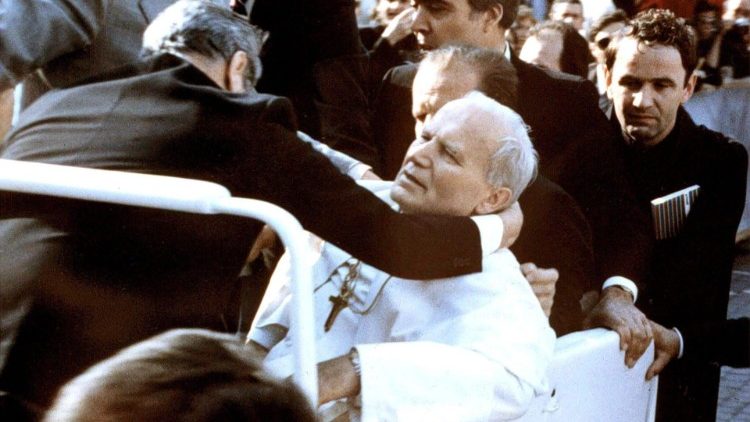
VATICAN CITY - Pope John Paul II was shot and seriously wounded yesterday as he was passing in an open car through a crowd of more than 10,000 worshippers in St. Peter's Square. The Pope was struck twice by pistol fire and was wounded in the torso and left index finger. He underwent an extensive surgery last night in which parts of his intestine were removed. A hospital bulletin sent at midnight said he was in "guarded" condition, but expressed confidence that "the Pontiff will recover soon."
Police arrested a gunman, 23 year old Mehmet Ali Agca, who was later identified as an escaped Turkish prisoner who had been serving a life sentence for the murder of left-wing journalist Abdi Ipekci in 1979. He had previously threatened to shoot the Pope during his visit to Turkey, which went ahead without incident in November of 1979. As of this writing, no motive has been established for the shooting.
Excerpt from The New York Times, May 14, 1981
President Bush releases a statement on the day of the shooting condemning the act of violence and praying for his recovery, mentioning that the shooting "brings back painful memories of the loss our nation felt with the death of President Reagan in a similar act of senseless violence". The Pope ultimately recovers.
On June 18th, Supreme Court justice Potter Stewart announces his resignation from the Court. Bush, knowing that Reagan had pledged during his 1980 campaign to nominate the court's first female justice, decides to make good on this promise, and begins researching possible candidates.
Following July polling showing high levels of satisfaction with American foreign policy despite somewhat moderated rhetoric from the new administration, Bush decides to take a more active role in deciding America's foreign affairs. His first major test of foreign policy comes on July 17th after Israeli jets bombard the wartorn Lebanese capital of Beirut and other locations in the south of the country, killing roughly 300 civilians, and causing international condemnation. Israel had also drawn condemnation a month earlier after bombing the Iraqi Osirak nuclear reactor, though Bush had not taken action at the time. Bush writes in his diary on July 17th, "Enough is enough. There is no room left for [Prime Minister] Begin to keep violating the laws of sanity." and orders the Treasury to impose an immediate aircraft embargo on Israel, though it the embargo is lifted a week later after the American undersecretary of state Philip Habib brokers a ceasefire between Israel and Lebanon. Bush also has to direct attention this month toward Poland, where what were once factory strikes had evolved in street protests. In the city of Łódź, 50,000 people march in protest of ration shortages. Bush decides again not to make any statements about the protest.
Meanwhile, representatives William Roth and Phil Gramm have finalized their sweeping tax cut proposal, known commonly as the Roth-Gramm Tax Cut. The provisions of the bill include lowering of tax rates on every bracket of the federal income tax by 15%, and corporate, estate, and capital gains taxes by similar margins. With bipartisan support, particularly from southern Democrats, the bill is presented as the synthesis of all of Reagan's ideas for tax reform, and passes both the House and Senate by comfortable margins. President Bush is highly skeptical of this bill, believing it will cause inflation and massively raise the deficit, but, knowing that a veto of "Reagan's masterpiece" would be political suicide, reluctantly signs it into law on July 31st.
CABLE TV HEARS THE MUSIC
At midnight yesterday, a new cable TV channel hit the airwaves across the state, but it's the radio jockeys rather than the cable networks who need to worry about competition. Warner Communications' Music Television, or MTV, is the first television channel dedicated solely to broadcasting music videos. The channel launched to the words "Ladies and gentlemen, rock and roll", played over footage of the recent launch of Space Shuttle Columbia. Following immediately after was the channel's first video, "Video Killed The Radio Star" by English rock band The Buggles, likely chosen on purpose as a challenge to the hegemony of the radio networks over the music industry. In its first day of broadcast, the channel experienced several technical challenges, including periods of dead air and poor audio and picture quality, which is not uncommon for new television channels as they configure transmission equipment. Some people, like Jersey City radio host Mike Maroney, have questioned: "Why would anybody pay to hear music when they can get it on the radio for free?" Music Television broadcasts 24 hours a day in the state of New Jersey, with a national launch planned in the coming weeks.
The Bergen Record, August 2, 1981
On August 3rd, 1981, the PATCO national air traffic controllers' union votes against initiating a general strike in protest of low pay and long hours imposed by the FAA. The union had previously hedged their bets on a sympathetic Reagan administration, given that Reagan had supported their demands against President Carter's FAA in 1980 and was himself a member of the Screen Actors' Guild, but since Reagan had been killed, ironically while meeting with union representatives, PATCO president Robert Poli figures that Bush, would have taken a less supportive position towards the PATCO workers. The union eventually accepts an offer from the FAA of a relatively modest 36-hour shortened workweek and 10% pay raises.
Guys from the Livermore weapons lab came to me talking about putting energy weapons in space, shooting down missiles from orbit, other wacky sci-fi stuff. Did they come to you? I thought you were supposed to turn these crazies away at the door.
President Bush in a memo to Science Advisor Benjamin Huberman, August 15, 1981
The search for a Supreme Court nominee ends after Bush chooses to nominate Arizona judge Sandra Day O'Connor, a moderate conservative, on August 14th. Conservative Republicans are angered by the choice, believing that O'Connor would be unwilling to overturn Roe v. Wade. Oklahoma senator Don Nickles states in an open letter to the White House that the nomination of O'Connor is something that Reagan would never have done, calling it "a total contradiction of President Reagan's platform". Nevertheless, the Senate confirms her nomination 95-1, with three Republicans and one Democrat abstaining.
Settling more into his position as President, Bush does not develop a unified set of policy goals, instead deciding to address problems as they come. Though his personal beliefs regarding domestic and foreign policy both conflict with the ones espoused by Reagan, he decides not to rock the boat, at least not until it came time to do it. As it turns out, the time comes sooner than expected. In September of 1981, Bush becomes aware of a concerning rise in the US unemployment rate, even as inflation drops below 10% for the first time since February 1979. Advisors quickly determine that the source of the unmeployment jump is the lending policy of Fed chairman Paul Volcker, who explains that he has been raising already high interest rates to counter inflation. The construction and manufacturing industries, dependent on government loans, have been unwilling to borrow money with the high interest rate, and mass layoffs have resulted. Bush meets with Volcker to persuade him to lower the interest, but Volcker remains adamant that rates must remain high until inflation is at manageable levels. After enough discussion, Bush allows Volcker to continue his efforts, but begins to watch the situation closely.
Friedman tells me Volcker has the situation under control, and wait for inflation to hit 5 percent. Jack wants him fired. I told him I would keep him on, but this unemployment thing is going to bite me in the ass if it doesn't end soon.
Bush diary entry, September 14, 1981
Unemployment continues to rise, jumping above 8% by November, in the same month inflation falls below 9%. Bush's approval rating sinks underwater, but Volcker, along with Treasury Secretary Donald Regan and economic advisors Milton Friedman and Beryl Sprinkel assure him that inflation is on a downward track and interest rates will be eased by the spring of 1982. Appeals to the American people using this information are largely unsuccessful.
In December 1981, Bush continues to exercise his "stay the course" foreign policy when the US-aligned Salvadoran government commits a massacre against civilians in the ongoing civil war. Press secretary Larry Speakes denies any reports of such an event happening. The very next day, martial law is declared in Poland, followed by mass arrests of striking workers. Bush strongly condemns the declaration in public, but privately calls Soviet premier Leonid Brezhnev to attempt to have the situation de-escalated, telling him the US is willing to assist with working out a "ceasefire" between the Polish army and the striking labor union. No agreement is reached.
For the year 1982, Bush sets a domestic policy goal of balancing the budget deficit, which he knows is nearly impossible following the Roth-Gramm tax cut. In December of 1981, the House had passed (by voice vote to avoid criticism of individual representatives) a resolution aiming to counter the deficit by repealing some of the measures of the Roth-Gramm act, and by cutting discretionary spending for some federal departments. Bush supports this personally but knows VP Kemp will be strongly against it if it goes to vote in the Senate. He begins meeting with Bob Dole, chairman of the Senate Finance Committee, to work out a plan that will allow a more agreeable version of the bill to pass in the Senate.
In early 1982, Contra counterrevolutionaries in Nicaragua, which the CIA had been covertly funding and training, begin attacking public infrastructure in the north of the country. The communist Sandinista government declares a state of emergency. Almost immediately, Al Haig begins pushing for increased funding of Contra rebels, or even a direct US invasion. He is rebuffed by Bush, along with Chief of Staff James Baker, both against escalating conflict in the region and risking further provocation of the Soviets. Small-scale funding and material support for the Contras persists throughout 1982, but Bush seeks to avoid escalating the war too heavily. Haig takes Bush's decision as a personal slight against himself, and is in a sour mood around the White House in March of 1982.
Haig seems to think the way to solve everything is a big gun. If Richard listened to him, we'd still be in Saigon. Then when you say "No, we're not invading Cuba" he acts like you spat in his face. If he keeps up his doom and gloom, he's out of here, I don't care what the Conservative Caucus says.
Bush diary entry, March 5, 1982
With the number of military governments in Latin America, another war in the Americas is inevitable. On April 2nd, the Argentinian junta invades and occupies the Falkland Islands from the United Kingdom, triggering the Falklands War. Bush sees the invasion as a clear violation of international law, and affirms support for the United Kingdom despite the anti-communist leanings of Argentine President Leopoldo Galtieri. Bush immediately begins sharing intelligence and equipment with PM Margaret Thatcher, and the islands are recaptured by late May.
When spring of 1982 is ending and interest rates remain high as unemployment nears 10%, Bush once again holds meetings with Volcker to pressure him to lower the rates. Though Volcker protests, with inflation remaining at 7%, the general opinion of the Cabinet has shifted to short-term damage control as the midterms draw near, and Volcker reluctantly lowers the interest rate in May of 1982 to 12%. The recession officially ends in July. During the rest of the year 1982, inflation stabilizes at around 6%, but unemployment is below 8% by the midterms.
It is not a controversial claim in the world of economics that a continuation of Paul Volcker's shock method would have likely left the economy in a much stronger state leading into the lending crisis of the 1990s. For this reason, many believe that the decision to return to the Keynesian policy of a federally price-controlled low interest rate killed what could have been the greatest economic boom since the post-war period.
Cato Institute, 2011
On June 4th, Bush goes to Paris to attend the G7 summit along with several members of his cabinet. On the final day of the summit, Israeli Defense Forces launch a ground invasion of Lebanon in direct violation of the 1981 ceasefire. The UN meaninglessly condemns Israel once again, but some members of the Bush cabinet urge action, knowing that the US is the only nation who can immediately stop the attack. In a conference room at the Hôtel de Crillon, Secretary of Defense Caspar Weinberger in particular says the invasion undermines all the goodwill the United States and Israel have established since the start of the Lebanon conflict, and says Bush should demand a withdrawal, followed by a total sanction if Israel does not comply. Secretary Haig strongly objects to this, believing the removal of the PLO from Lebanon was necessary to install a more stable government. A personal argument soon breaks out between Weinberger and Haig, and the Deputy Chief of Staff Mike Deaver joins to suggest that it's strange that Israel so confidently invaded Lebanon when President Bush had never communicated with them on the matter- a veiled accusation at Haig, the only other person in the administration holding unrestricted access to communications with the Israeli government. Bush himself looks like he shares Deaver's concern, despite not directly speaking to the room on the matter. Dejected, Haig remains mostly silent for the rest of the discussion, and does not communicate with his staff until he has returned to Washington on June 11th. He submits his resignation as Secretary of State five days later, which Bush accepts.
What they don't tell you is, there was a level of contempt for me in the administration from the start. Weinberger, Baker, Deaver, among others, had been jumping at any reason to make me look bad since that day in the briefing room. Woody Goldberg called it a palace coup. The fact is, I was an appointment of Ronald Reagan, and not of George Bush, and I had a level of personal understanding with Ronald Reagan that was not there with Bush. The day Reagan died, the writing was already there on the wall.
Alexander Haig in his memoir "Inside Man", 2000
Ultimately, the administration decides not to immediately threaten sanctions on Israel for two reasons; firstly, there is not enough support in Congress to cut off Israel, and secondly, they would derail the ongoing arms sales from Israel to Iran, which the US has interests in maintaining to keep a clear winner from emerging in the Iran-Iraq War. Bush calls with Israeli president Menachem Begin and defense minister Ariel Sharon from London on June 7th, urging "restraint" in the invasion of Lebanon.
On June 13th, John Hinckley Jr's insanity defense is rejected by a DC jury, having found that the Reagan assassination was premeditated and Hinckley competent to stand trial. He is sentenced to death by electric chair. This is met with mixed reactions in the general public, and is seen negatively especially among mental health advocates and those who oppose capital punishment. Attorney General William French Smith defends the decision, referring to the biblical concept of "an eye for an eye".
In late June, the deficit bill worked out by members of the Bush admin and Bob Dole goes to vote in the Senate as the Tax Equity and Fiscal Responsibility Act (TEFRA). The bill includes a restructuring of state payouts to Medicaid, base tax rate increases by 10% (a reversal of most of the Roth-Gramm cut), and cuts to funding of every discretionary category aside from defense. The bill has bipartisan support, but only from about half of each party as more liberal Democrats dislike it for its austerity measures while conservative Republicans decry it as "one of the largest tax increases since the war". Bush publicly calls it a "sound bill", once again sparking accusations of having betrayed Reagan's ideology. Particularly dismayed was VP Jack Kemp, who had been a vocal supporter of the Roth-Gramm cut. TEFRA passes the Senate with amendments by an extremely narrow margin of 50-49, and then the House again with a similarly narrow margin. Bush signs it into law late in August, significantly hurting his standing with large factions of the GOP. The deficit for the fiscal year 1982 lowers by about 35 billion dollars, down to $95 billion.
I.R.A. BOMB KILLS 20 IN LONDON

14 British soldiers and six civilians were killed and 72 people were wounded today when three bombs planted by the Irish Republican Army exploded in three London parks.
In Hyde Park, six members of the Queen's cavalry were killed in transit to the changing of the guard at Whitehall when a car exploded at 10:45 AM, also killing six horses and wounding 21 civilians. Two hours later, a nail bomb exploded at a public performance by army musicians at Regent's Park, killing eight army musicians and four civilians, and wounding a further 35. Minutes after that, a final bomb exploded at St James's Park near Buckingham Palace, killing two civilians and wounding 18 near the Victoria Memorial feature. The Irish nationalist bombing came after nearly a year of relative calm, and was the most costly attack since the killing of Lord Mountbatten and 21 others in August of 1979. In a statement taking responsibility for the attacks, the I.R.A. suggested that the attacks were revenge for a recent string of arrests in Northern Ireland of individuals suspected of bomb making. The first explosion could be heard from 10 Downing Street, where members of Parliament and the Cabinet took shelter as police and military members secured the area.
Fear ripped through London as police sectioned off city parks and public areas searching for more explosive devices. A car was found parked near Buckingham Palace with gasoline cans in the truck, causing the cancelation of a garden party that had been planned by Queen Elizabeth. President Bush released a statement today strongly condemning the attacks, calling them "incompatible with democracy". In the House of Commons, member of parliament William Whitelaw stated that he hoped the incident would deter Irish-Americans from contributing to the I.R.A.
The New York Times, July 21, 1982
In August, reports of massacres in Lebanese villages by pro-Israel militants spread across international media, leading the Bush administration to revisit possible sanctions on Israel. The administration finds that Gallup polls now show that 65% of Americans disapprove of Israeli actions in Lebanon, and intelligence in Iraq returns that organization and morale on the Iraqi frontline has become very low since their pyrrhic victory against an Iranian incursion near the city of Basra, which resulted in Iranian territorial gains in Iraqi territory. Some communications from Iraqi generals to President Saddam Hussein appear concerned that with a highly depleted air force, border defenses could be at risk of collapse. With both of the conditions prohibiting sanctions on Israel removed, Bush publicly demands Israel break their siege of the city of Beirut and begin withdrawing their forces from Lebanon, to be replaced by a NATO peacekeeping force. Not only does Israel not make a response, but the day after, the IAF carries out a saturation bombing on Beirut, killing over 300 civilians. With no clear alternative and a popular mandate for sanctions, Bush orders a major arms embargo on August 11th.
The effects on the wars in both Lebanon and Iraq are visible nearly immediately. Though not immediately facing weapons shortages, morale in the IDF drops noticeably after realizing they will have to sustain a long-term occupation without American arms shipments. Defense Minister Sharon is stripped of many of his powers by the Israeli cabinet on August 13th, and the Syrian army, emboldened by news of the embargo, increases its presence on the Lebanese frontline. Meanwhile, as Israel had been the source of over half of Iranian arms and aircraft shipments, Iran's offensive in Iraq has to be scaled back significantly, and Ayatollah Khomeini starts having to seriously consider accepting Saddam Hussein's proposals for a truce. Israel eventually accepts a ceasefire with the PLO in early September without completing the siege of Beirut or fully expelling the PLO from Lebanese territory. A NATO peacekeeping force of 2,000 is deployed to southern Lebanon, facing significant animosity both from Israeli and Arab militants. Iran accepts a white peace with Iraq in late September.
The end to the Iran-Iraq War in 1982 was something of a strategic blunder for the the administration. Bush and Weinberger had believed that Khomeini's hatred for Saddam outweighed reason, and so hedged their bets that Iran would keep fighting in Iraq even with depleted weaponry, tying both countries up for the foreseeable future. Instead, the combination of Israeli aggression in Lebanon and stalemate on the Iranian-Iraqi border dampened war support in the Ayatollah's inner circle, and likely made him see clearly that the war was becoming unwinnable. Ultimately, it was not disastrous for our interests, since the war only became unwinnable for Iran after the arms imports stopped. Had Israel been allowed to keep sending shipments in perpetuity, Iran could have ousted Saddam in 1982 and consolidated power in the Middle East, becoming a much bigger threat.
Richard V. Allen in his book "How the Cold War was Won", 2002
Bush faces heavy backlash from within the GOP for his actions regarding Israel. Members of the evangelic group Moral Majority accuse him of "ceding the Holy Land to Islamic interests". A coalition of 20 Republican senators led by Minnesotan Rudy Boschwitz and Californian Samuel Hayakawa condemn Bush for abandoning a US ally, though he is supported by Senators Jesse Helms and Mark Hatfield, who had previously called for a cutoff of aid to Israel. A caller to a Christian radio show in Missouri declares Bush to be the beast described in the Book of Revelations, who orchestrated the killings of John F. Kennedy and Ronald Reagan to seize power and place Satan (who she believes to be taking the form of Syrian president Hafez al-Assad) in control of Earth. A source of criticism in the White House comes from Jack Kemp, who had opposed an arms embargo, though he keeps mostly quiet on the matter in public to not jeopardize the administration's credibility.
I don't know why he ever made me vice president if he was just going to keep sidelining me all the time.
Jack Kemp in a bitter moment to his wife Joanne, August 1982
The 1982 midterms are held on November 2nd. Democrats gain 33 seats in the House, giving them a supermajority, however they are unable to flip the Senate, gaining only 1 seat to bring the total to 48 Democrats, 51 Republicans, and 1 independent. The Bush administration is not surprised by these results, and are relieved that the Republican lead in the Senate is maintained.
On November 13th, President Bush attends the dedication of the Vietnam Veterans Memorial in Washington, D.C., before holding his first call with the new Soviet premier Yuri Andropov, who had taken power following the sudden death of Brezhnev on November 10th. Bush intends to discuss drawing up a nuclear disarmament treaty but finds Andropov much more obstinate than Brezhnev had been. After the call ends, Bush remarks to Secretary Baker that "until this one dies we won't get anything done".
1982 was the last year of the great American malaise, the time when America's position as the world's strongest nation was truly in question. President Bush's rocky start was only natural for someone tasked with the near indomitable challenge of restoring faith in a nation that had suffered two presidential assassinations, one resignation, a decade of inflation, and the constant threat of nuclear war. If ever there was a man for the job, it was Ronald Reagan. Unfortunately, Reagan was gone. Bush picked up the reins and did the best he could, but for the American voter in 1982, it simply wasn't enough.
YouTube history channel, 2018
DELOREAN UNVEILS NEW SEDAN

The DeLorean Motor Company unveiled its second ever car model at the Los Angeles Auto Show today, a four-door sedan titled the "DMC-24". The luxury car is designed to be more aerodynamic and faster than the existing DMC-12 model, with a top speed of 130 miles per hour courtesy of a turbo-charged Renault V6 PRV engine. At the Los Angeles Convention Center, CEO John DeLorean boasted to attendees that the interior of the car is highly comfortable, with 38 inches of leg room for all 5 seats and features such as heated and cooled front seats, power-adjustable rear seats, self-tinting glass, a built-in phone and refrigerator. Operating the car will also be easier than ever, says DeLorean, with the driver's choice of manual and automatic 5-speed transmission, built-in air jacks, and a card-based key system. It also features the iconic gull-wing doors present on the existing sports car model. The unveiling is thought to be a big win for DeLorean, which struggled with sales and consistent performance issues in its flagship model, even risking insolvency after delays with repaying debts. The DMC-24 has a relatively high price tag, estimated at $30,000 when the car hits the market. A commercial release is targeted for the third quarter of 1983.
MotorTrend Magazine, January 9, 1983
The Reagan Gun Violence Prevention Bill is signed into law on January 26th, 1983, nearly two years after its introduction into the Senate. The bill institutes mandatory background checks on firearm purchases with a five-day waiting period for the purchaser to be checked for a criminal record, history of mental illness, drug use, and restraining orders. Less than a month later, 13 people are shot dead in a robbery at a gambling club in Seattle, Washington. Amid an uptick in "gang shootings" nationwide, Bush signs the Violent Crime and Drug Enforcement Improvements Act of 1982, massively increasing penalties for drug trafficking, raising the mandatory minimum sentence for crimes committed with firearms to two years, extends jurisdiction over certain crimes to federal officers, and increases the ability of judges to deny bail to offenders. Bipartisan bills to ban the sale of machine guns, other fully automatic weapons, and armor piercing ammunition are also introduced and passed in 1983.
A Gallup poll conducted in March 1983 finds that Bush's approval rating is 44%, up from 38% during the height of the unemployment crisis but still uncomfortably low. He trails potential Democratic challengers in polling for the 1984 election, particularly front-runner Walter Mondale. The vice president under Jimmy Carter, Mondale is a traditional, New Deal Democrat who aims to regain voters from the Democratic coalitions that elected John F. Kennedy and FDR. Though most voters see his platform as uninspired, many working-class Americans are uncomfortable with the slow recovery of the economy from the 1981 recession, which Mondale blames on Bush's tax policy. In response to the low poll numbers, Bush plans to make 1983 a "year of achievements", building on already-planned events such as the Space Shuttle missions and the 1984 Summer Olympics (to be held in Los Angeles). In addition to planned economic programs, Bush begins working to improve relations with countries around the world to make voters see him as a talented statesman, sending envoys to connect with nations across the Third World. Included in his rotation of envoys is former President Nixon, who had already been making frequent trips to Asia.
In Lebanon, the NATO force's peacekeeping efforts are constant but partisan confrontations are still not uncommon, leading some to believe that the force is incompetent. The peacekeepers are attacked on several occasions both by jihadist and Christian paramilitary groups, eventually resulting in the deaths in April 1983 of 2 soldiers (1 American, 1 French) in a grenade attack that both the Islamic Jihad Organization and the Christian Kataeb Forces claim responsibility for. Secretary of State Brent Scowcroft goes to Lebanon shortly after to work with Lebanese president Bachir Gemayel to restore control of southern Lebanon to the Lebanese Army. The NATO force slowly withdraws from Lebanon starting late in the year.
LUCAS RETURNS WITH 'THE JEDI'
The force was not with "Return of the Jedi", which came to theaters this week as the concluding film of George Lucas's massively popular Star Wars space-fantasy series. Reviewers have named it the dullest of the trilogy, criticizing poorly written dialogue, subpar battle scenes, and uncreative character design as factors giving the film its low ratings. Despite this, the enduring popularity of the trilogy's 1977 debut film continues to draw fans to the box office. Return of the Jedi drew a record $25 million in revenues in its opening weekend, breaking a record previously set by 1982's Rocky III. Lucas says he has no plans to return to Star Wars, and will be focusing on other projects such as continuing the Indiana Jones series, directed by Steven Spielberg, and other solo endeavours.
The New York Times, May 30, 1983
Bush begins to publicly make appeals to the Soviets to engage with disarmament negotiations, putting blame on the Soviet government for preferring their "warmongering" in Afghanistan and refusing peace efforts. Internally, US intelligence is aware that both Premier Andropov and Second Secretary Konstantin Chernenko are terminally ill and largely unable to direct Soviet policy.
In August 1983, General Mejía Victores deposes Guatemalan president Efraín Ríos Montt and pledges to restore democratic governance and end corruption in the country. Victores begins sending direct arms and funding to the Nicaraguan Contras, enabling them to begin making gains against the Sandinistas. Bush applauds the accession of Victores to power and supports his government, along with allies in El Salvador and the Contras, but watches with caution for large-scale massacres. US Southern Command liaisons to anti-communist leaders in Central America stress that any attacks on civilians could lead to potential withdrawal of support by the Bush government.
On September 1st, President Nixon joins representatives Larry McDonald and Jesse Helms on Korean Air Lines flight 007 to Seoul to attend a celebration of the 30th anniversary of the United States–South Korea Mutual Defense Treaty. As it is known that a former President will be on board the plane, the flight crew is instructed to double-check all of the plane's systems. A technician finds that the plane's automated navigation coordinates had been inputted improperly, potentially causing the flight's path to veer hundreds of miles off course. The error is fixed and the flight lands in Seoul without incident.
S. Korea President Chun Injured In Assassination Attempt

RANGOON - Chaos broke out in the capital of Burma Sunday as a hidden bomb exploded during a South Korean delegation's visit to the Martyrs' Mausoleum, killing 21 attendees and injuring 50 others, including President Chun Doo-Hwan. The president is currently at Rangoon General Hospital, being treated for burns to his left arm and leg. He is expected to recover. Among the dead were foreign minister Lee Bum Suk, economic advisor Kim Jae Ik, deputy prime minister Suh Sook Joon, and former US ambassador Hahm Pyong Choon.
Police have identified several North Korean army captains who were present in Rangoon at the time as suspects. Two men, Kang Min Chul and Kim Jin Su, committed suicide by blowing himself up with a grenade before police located him. The third, Shin Ki Chul, was killed in a police shootout in a Rangoon suburb. The bombing occurred during a ceremony in which President Chun intended to honor the memory of Burmese revolutionary and former Premier Aung San, who was himself assassinated in 1947. State leaders from across the Asia-Pacific region, including President Bush, have issued condemnations of the attack. Acting President of South Korea Kim Sang Hyup stated in Seoul that the Communist regime in North Korea is certainly responsible, and vowed that the violent act "will not be met with silence".
The Washington Post, October 10, 1983
The State Department quickly begins communications with South Korean government officials, discouraging any drastic response to North Korea that would compromise global security. South Korean troops are mobilized at the DMZ, but no war breaks out. Chun Doo-hwan returns to South Korea on October 23rd, though his use of the left side of his body remains impaired.
American desires to maintain peace with the communist world are nonetheless ruined later that month when the Prime Minister of Grenada is executed in a bloody coup and replaced by communist general Hudson Austin. Nearby Caribbean governments including Barbados and Jamaica call the White House requesting an intervention, and Bush becomes aware that 600 US medical students are present in Grenada. He begins coordinating with a coalition of Caribbean nations to launch a military invasion. He also calls Margaret Thatcher, but she is unwilling to dedicate any British military assets to the invasion.
On November 1st, the US and Caribbean coalition organize on Barbados and launch a combined aerial and amphibious operation of Grenada, targeting the capital of St. George's and the Pearls Airport. On the first day of the invasion, the US medical stidents in St. George's are liberated and the country's two airports are captured, though six US casualties are incurred as a result of poor communications between military branches. Resistance from the Grenadan military and Cuban military personnel is weak. The main island is overrun by November 3rd, and remaining holdouts on the island of Carriacou surrender on November 6th. A democratic government is installed in Grenada, and occupying troops withdraw in December.
The effect of Grenada on the Bush administration's popularity was profound. A successful regime change in less than a week and with only twelve casualties showed the American people that their military had learned from the mistakes of Vietnam, and Bush with his experience as director of the CIA was credited with the turnaround. In the words of Caspar Weinberger, Grenada opened a new chapter in the history of the United States Armed Forces.
Grand Strategies in the Cold War, John Lewis Gaddis, 2010
NATO exercise Able Archer 83 occurs simultaneously with the Grenada operation, triggering Soviet fears of an upcoming US invasion, though this is dismissed by many generals and KGB members who believe it highly unlikely that the Bush administration would risk a world war. The exercise ends without incident on November 11th.
Gallup polls conducted in December 1983 give Bush an approval rating of 52%, up from 46% in October. Democratic primary polling puts Walter Mondale as the frontrunner with 39% of votes, followed by John Glenn with 26% and Jesse Jackson with 14%.